If your child needs dental work and your dentist has mentioned sedation, it’s completely natural to feel uneasy. “Sedation” sounds serious, and as a parent, safety is your first concern. The reassuring reality is that when performed by trained professionals with proper monitoring, sedation is a safe, well-established part of pediatric dentistry that helps anxious or young children get the care they need comfortably. Here’s an honest look at how it works.
Why Would a Child Need Sedation at the Dentist?
Sedation isn’t about convenience; it’s about making necessary treatment possible and stress-free. It’s commonly recommended when:
✅ A child has significant dental anxiety or fear that makes treatment difficult.
✅ A very young child can’t sit still long enough for safe, careful work.
✅ Multiple procedures are needed in one visit, sparing the child repeat trips.
✅ A child has special healthcare needs that make traditional visits challenging.
✅ A strong gag reflex or difficulty with numbing gets in the way.
For a frightened child, sedation can turn a distressing experience into a calm one and prevent the kind of negative memory that leads to dental fear later in life.
The Types of Sedation Used for Kids
Not all sedation is the same. Pediatric dentistry uses different levels depending on the child and the procedure:
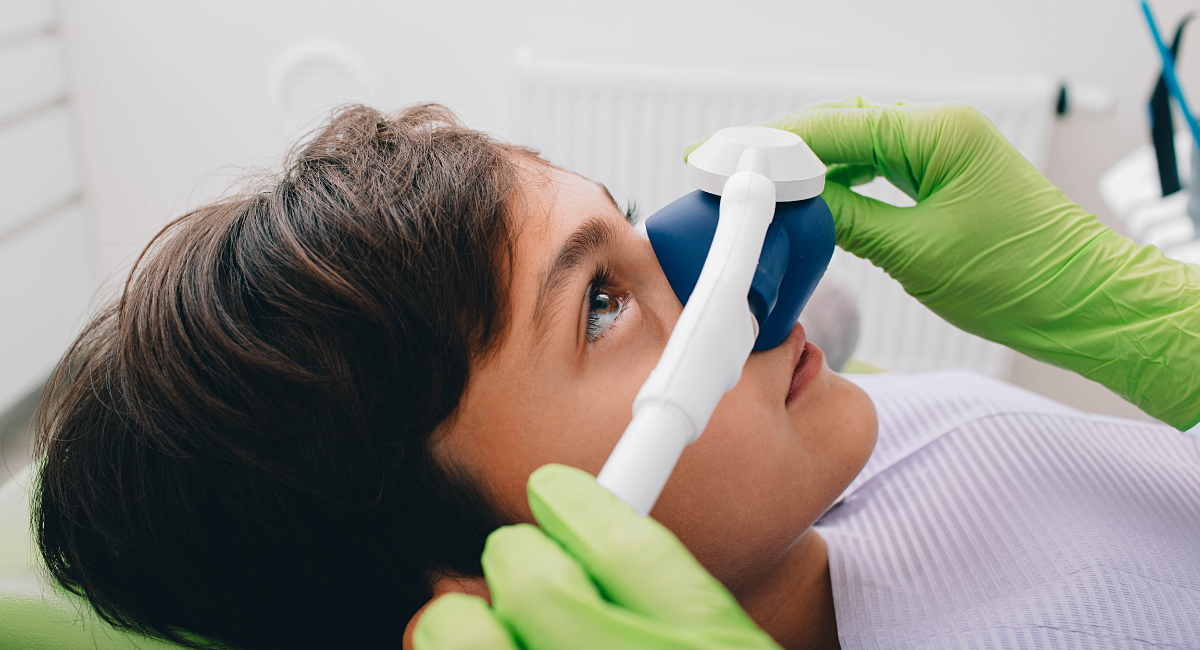
Nitrous Oxide (Laughing Gas)
The mildest and most common option. Your child breathes it through a small nose mask, stays fully awake and able to respond, and feels relaxed. It wears off within minutes once the mask is removed, so kids bounce back quickly.
Mild Oral Sedation
A measured dose of medication that makes a child drowsy and calm while still conscious. It’s useful for children who need a little more help relaxing than laughing gas provides.
Deeper Sedation
Reserved for more extensive treatment or children who can’t tolerate other approaches, and always delivered with specialized training and continuous monitoring.
You can see the options our practice offers on our sedation dentistry page.
What makes it safe: The safety of sedation comes down to proper screening, correct dosing for your child’s weight and health, and continuous monitoring of breathing and heart rate throughout the visit.
How We Keep Sedation Safe
Safety is built into every step:
✅ Health review. We review your child’s full medical history before recommending any sedation.
✅ Precise dosing. Medication is carefully calculated for your child’s age, weight, and health.
✅ Continuous monitoring. Vital signs are watched throughout the procedure.
✅ Clear instructions. We give you specific before-and-after guidance so you know exactly how to prepare and what to expect.
What to Expect Before and After
Beforehand, we’ll give you instructions about eating and drinking. Afterward, your child may be drowsy for a little while; laughing gas wears off almost immediately, while oral sedation can leave a child sleepy for a few hours. Plan for a quiet rest of the day and follow the aftercare notes we provide.
Is Your Child Just Anxious, Not in Need of Sedation?
Many children do beautifully with gentle, kid-friendly techniques and never need sedation at all. If anxiety is the main concern, our team uses a range of comforting approaches, and we’ve written more about helping nervous kids in our guide on helping an anxious child at the dentist.
Have questions about sedation for your child? We’re happy to walk you through the options in person. Talk to Our Team.
Frequently Asked Questions
Is dental sedation safe for young children?
Yes. When performed by trained professionals with proper health screening, precise dosing, and continuous monitoring, sedation is a safe and long-established part of pediatric dentistry.
What is the mildest form of sedation for kids?
Nitrous oxide, or laughing gas, is the mildest and most common. The child stays awake and responsive, feels relaxed, and recovers within minutes after the mask is removed.
Will my child be unconscious during sedation?
Usually not. With laughing gas and mild oral sedation, children remain conscious and able to respond. Deeper sedation is reserved for specific cases and always involves specialized monitoring.
How long does it take a child to recover from sedation?
Laughing gas wears off within minutes. Oral sedation can leave a child drowsy for a few hours, so a calm rest of the day is recommended.
Does my child actually need sedation?
Many children do well with gentle, kid-friendly techniques and don’t need sedation at all. It’s recommended mainly for significant anxiety, very young children, extensive treatment, or special healthcare needs.
Still have questions about sedation for your child? That’s completely normal, and we’d rather talk it through with you than have you worry. Our team will review your child’s health, explain exactly which comfort option fits their needs, and answer every question before anything is decided. Your child’s safety and comfort come first, always. Call Growing Smile in Peabody at (978) 587-3368 or reach out online to schedule a conversation.