Most parents assume braces are a teenage milestone – something to think about around age 12 or 13, once all the adult teeth have arrived. But orthodontic specialists and pediatric dentists agree: waiting that long can actually make things harder to fix.
That’s why the American Association of Orthodontists recommends an early orthodontic evaluation at age 7 for every child. At this stage, a trained eye can spot developing bite problems, jaw discrepancies, and crowding concerns that are far easier – and far less costly – to address while your child is still growing.
At Growing Smile Pediatric Dentistry and Braces in Peabody, we offer early orthodontic screenings for children throughout the North Shore, including Lynnfield, Salem, Danvers, Beverly, Swampscott, Marblehead, and beyond. And in many cases, catching a problem early means your child may avoid braces altogether – or need far less treatment later.
What Is an Early Orthodontic Evaluation?
An early orthodontic evaluation – sometimes called a Phase 1 screening or interceptive orthodontic evaluation – is a comprehensive assessment of your child’s teeth, bite, jaw alignment, and overall oral development.
It is not the same as starting braces. In fact, most children who come in for an early evaluation don’t need any treatment right away. The goal is simply to get a clear picture of how things are developing and whether any early intervention could make future treatment simpler, shorter, or unnecessary.
During the evaluation, your orthodontist or pediatric dentist will assess:
 The relationship between the upper and lower jaws
How baby teeth are being lost, and adult teeth are coming in
Early signs of crowding or spacing problems
Crossbites, underbites, overbites, and open bites
Thumb-sucking or tongue-thrusting habits affecting dental alignment
Jaw symmetry and facial development
The entire process is pain-free, non-invasive, and typically completed in a single appointment.
Why Age 7 Specifically? The Science Behind the Timing
Age 7 isn’t an arbitrary number. It’s a carefully chosen milestone based on how children’s dental and skeletal development actually works.
By around age 7, most children have a mix of baby teeth and early permanent teeth – including the first permanent molars and incisors. This combination gives a pediatric orthodontist enough information to evaluate the bite and jaw relationship clearly, while the bones are still pliable enough to respond well to early guidance.
Here’s what makes this window so valuable:
Jaws Are Still Growing
A child’s jaw bones are still developing and highly adaptable at age 7. Interceptive treatments like palate expanders or partial braces can guide jaw growth during this window in ways that simply aren’t possible once growth plates close in the mid-teens.
Problems Are Easier to Correct Early
Many bite issues – particularly crossbites, underbites, and severe crowding – respond dramatically better when treated during active growth. Addressing them at 7 or 8 may take months; waiting until 14 or 15 could mean jaw surgery.
You Can Prevent Problems From Getting Worse
Some orthodontic issues get progressively worse over time if left unaddressed. Early evaluation allows your dentist to monitor or intercept these issues before they compound.
Your Child’s Self-Confidence Is at Stake
Children are acutely aware of how their teeth look – often far earlier than parents realize. Protruding front teeth, misaligned bites, and visible crowding can affect a child’s willingness to smile, speak up in class, and feel confident among peers. Early treatment can make a meaningful difference during some of the most socially formative years of their life.
Signs Your Child May Benefit From an Early Evaluation
While every child should have a screening by age 7, certain signs make early evaluation especially important:
Early or late loss of baby teeth (before age 5 or still present past age 13)
Difficulty chewing or biting into food
Mouth breathing rather than nasal breathing
Thumb or finger sucking past age 4–5
Teeth that appear crowded, misplaced, or blocked
Upper and lower teeth that don’t meet properly when biting
Jaw that shifts, clicks, or pops when opening or closing
Speech difficulties related to dental alignment
Protruding front teeth are at a higher risk of injury
If any of these apply to your child, don’t wait for their next routine checkup to mention it – call us directly. Earlier is almost always better.
What Is Phase 1 Orthodontic Treatment?
If the early evaluation reveals a problem that benefits from intervention, your child may be recommended for Phase 1 orthodontic treatment – also known as interceptive orthodontics. This typically takes place between ages 6 and 10, while the jaw is still growing.
Phase 1 treatment is not full braces. It might involve:
A palate expander to widen a narrow upper jaw and create space for incoming teeth
Partial braces on select teeth to guide alignment
A space maintainer to hold the space after early tooth loss
Habit appliances to break thumb-sucking or tongue-thrusting patterns
Growth modification devices to encourage proper jaw development
The goal of Phase 1 is to create the best possible foundation for the permanent teeth, so that Phase 2 (traditional braces in the early teen years, if still needed) is simpler, faster, and less involved.
Many children who complete Phase 1 treatment still go on to have braces later, but for a shorter duration and with better overall results. Some avoid braces entirely.
What to Expect at an Early Orthodontic Evaluation at Growing Smile
We’ve made the early orthodontic evaluation as smooth and stress-free as possible for both children and parents. Here’s what the visit looks like:
Welcome and intake – our team reviews your child’s dental history and any concerns you’ve noticed at home
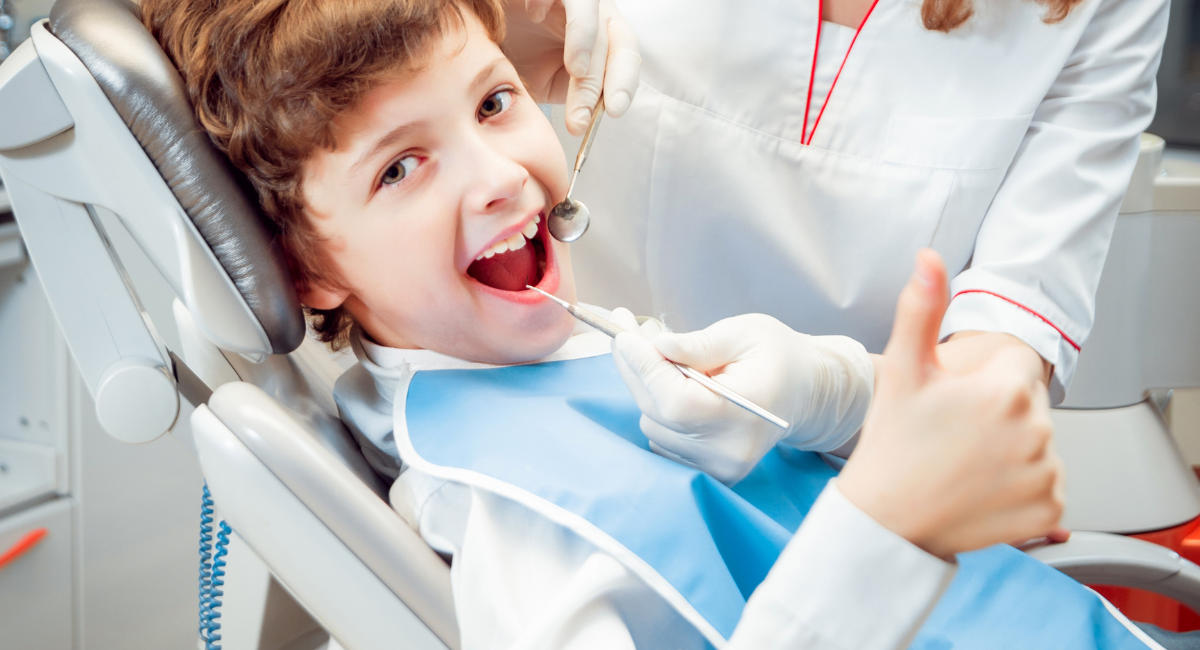
Clinical examination – our specialist examines your child’s teeth, bite, jaw alignment, and facial development
Diagnostic records (if needed) – this may include X-rays and photos to get a complete picture
Findings and recommendations – we walk you through exactly what we found, in plain language, with no pressure
A clear plan – if treatment is recommended, we explain what it involves, when it would start, and what it costs; if monitoring is sufficient, we’ll tell you that too
You will never leave our office wondering what comes next.
Schedule your child’s early orthodontic evaluation at Growing Smile →
The Cost of Waiting: Why Early Evaluation Saves Money Long-Term
One of the most common reasons parents delay orthodontic evaluations is cost – but the financial logic actually works in reverse.
Catching a bite problem at age 7 with a palate expander costing a fraction of full braces is dramatically less expensive than correcting the same problem at 16 with full orthodontic treatment – or, in severe cases, corrective jaw surgery.
Early evaluation is also often covered by dental insurance as part of preventive care. And at Growing Smile, we accept MassHealth and most major dental insurance plans. We’ll verify your coverage before your appointment so you know exactly where you stand.
Frequently Asked Questions About Early Orthodontic Evaluations
What is an early orthodontic evaluation at age 7?
An early orthodontic evaluation at age 7 is a screening appointment in which a pediatric dentist or orthodontist assesses your child’s teeth, bite, jaw alignment, and facial development. It is recommended by the American Association of Orthodontists for all children around age 7, regardless of whether any problems are visible. Most children who come in will simply be monitored – no treatment needed yet.
Does my child have to start braces at age 7?
No. The vast majority of children who come in for an early orthodontic evaluation at age 7 do not begin any treatment right away. The evaluation simply gives your dental team the information they need to monitor development and intervene at the ideal time if necessary.
What if my child is already older than 7 – is it too late?
Not at all. While age 7 is the ideal first screening, evaluations are valuable at any age. If your child is 9, 11, or even in their early teens, an orthodontic evaluation is still absolutely worthwhile. Call us, and we’ll assess where they are in their development.
How long does an early orthodontic evaluation take?
Most evaluations are completed within a single appointment of 30–60 minutes. If diagnostic records such as X-rays are needed, it may take a bit longer, but the process is straightforward and entirely comfortable for your child.
Is Phase 1 orthodontic treatment covered by insurance?
Coverage for Phase 1 orthodontic treatment varies by plan. Many dental insurance plans include an orthodontic benefit that applies to Phase 1 treatment. We will verify your insurance benefits before your appointment and help you understand exactly what is covered. We also accept MassHealth for eligible patients.
How is Growing Smile different from a general orthodontist?
Growing Smile Pediatric Dentistry and Braces is a pediatric-specialty practice, which means our entire team – from the front desk to the treatment chair – is trained and experienced with children. We understand child development, behavior, and communication at every age, which makes evaluations and any subsequent treatment far more comfortable for your child. Plus, since we offer both pediatric dentistry and braces under one roof, your child’s dental history is always right there with us.
Don’t Wait Until the Problems Are Harder to Fix
The window for easy, effective orthodontic intervention is open right now – but it won’t be forever. Jaw growth slows and eventually stops, and the flexibility that makes early treatment so powerful disappears with it.
If your child is around age 7 – or if you’ve noticed any signs of bite, alignment, or spacing concerns at any age – the smartest move you can make is to schedule an evaluation today. It costs nothing to find out. And the information you gain could save your child years of treatment and thousands of dollars down the road.
📍 79 Lynnfield St, Peabody, MA 01960
📞 Call or Text: (978) 587-3368
🌐 Book online at growingsmilepeabody.com
Proudly serving families in Peabody, Lynnfield, Salem, Danvers, Beverly, Swampscott, Marblehead, and across the North Shore.